

Medication & and Home Medical Waste
The proper disposal of unused medications is a problem. Medications flushed down the drain are a problem for the water treatment system and the environment. Unused medications sitting in medicine cabinets are a community safety problem because too often medications end up in the hands of people that abuse substances. Individuals with medications, home medical waste such as testing lancets or injection sharps should follow the procedures below for proper disposal. No commercial medical waste or wastes accepted from any businesses. There are some medications that may have very special instructions for proper disposal. Also, Convenience Centers are not allowed to accept recognizable body parts or containers with bodily liquids or bodily fluids.
Safe Home Disposal of Medications:
Do not flush or pour medications down the drain. Remove medication from original packaging and mix with an undesirable substance such kitty litter or used coffee grounds. Place the mixture in a bag and throw in your trash container. Remove and destroy any personal information on the empty medicine container and recycle the empty container.
Sharp Containers, Syringes, Testing Lancets:
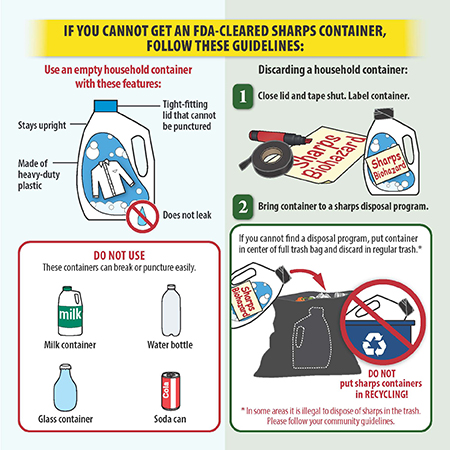
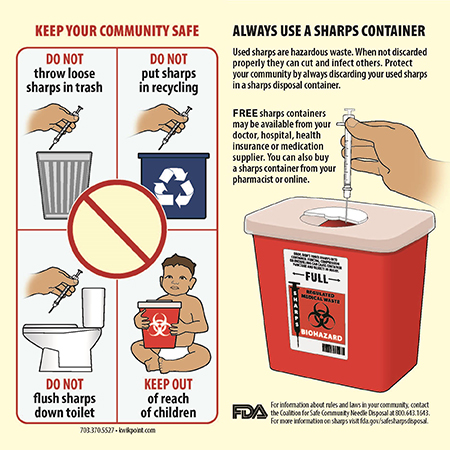
Sharps waste may be thrown out with household trash, but the container must be safeguarded prior to disposal. Safeguarding prevents waste worker injuries in case waste must be handled during collection or transport. Sharps or home medical waste containers typically have syringes, lancets, testing strips, bandages, catheter bags, and tubing. If an FDA approved container is not used it is important to use a sturdy old bleach or laundry detergent container or anything that can withstand compression and remain sealed. Once the container is full the lid should be firmly secured and then taped to prevent removal. The container should be labelled as containing sharps, biohazard, or bodily fluids that way if it had to be handled manually a waste worker will know the contents. Once secured and labelled it can be placed in household trash. Individuals may choose to bag it prior to disposal, effectively double bagging the container while protecting personal privacy. Below are infographics illustrating the proper packaging process.
Medication Collection Drop-off Sites and Events:
There are drop off collection containers located in the community at participating locations. These locations are best options for accepting controlled substances that pose a greater risk of abuse. Events are also held periodically to collect medications from the community. Links below are provided for looking up available FDA approved drop off locations and to inquire about DEA disposal locations and events. The City of Knoxville maintains a collection box that is open 24 hours a day 7 days a week at their main police station. The address of that collection location is below.
Knoxville Police Department (medication collection drop box)
1650 Huron Street
Knoxville, TN 37917
Call (865) 215-7285
( Hours may vary, call for availability )
https://www.fda.gov/drugs/disposal-unused-medicines-what-you-should-know/drug-disposal-drug-take-back-locations
DEA Website
https://apps.deadiversion.usdoj.gov/pubdispsearch/spring/main?execution=e1s1
TN Website
https://www.tn.gov/opioids/education-and-prevention/prevention/safe-disposal-of-unwanted-medication.html
Medical Waste -Large Amounts, Businesses
Businesses, institutions, or anyone with large amounts of medical waste should contact a medical waste disposal company. Stericycle operates in Knox County. There may be others.
Stericyclehttps://www.stericycle.com/en-us



